Relational Awakening Research

Responsibility and oversight

Who is behind the research?

Relational Awakening Research is human-led and uses named AI research assistants assigned to bounded research-development roles. They help organize sources, test language, examine safety and privacy boundaries, and prepare versioned work for human review. They do not act as investigators or make participant decisions, and their outputs do not replace human judgment or required professional review.

01 · Human responsibility

Human accountability remains central.

AI-supported work is reviewed, corrected, accepted, or rejected by accountable people. It does not transfer responsibility away from the project’s human lead or any later formally appointed investigators and institutions.

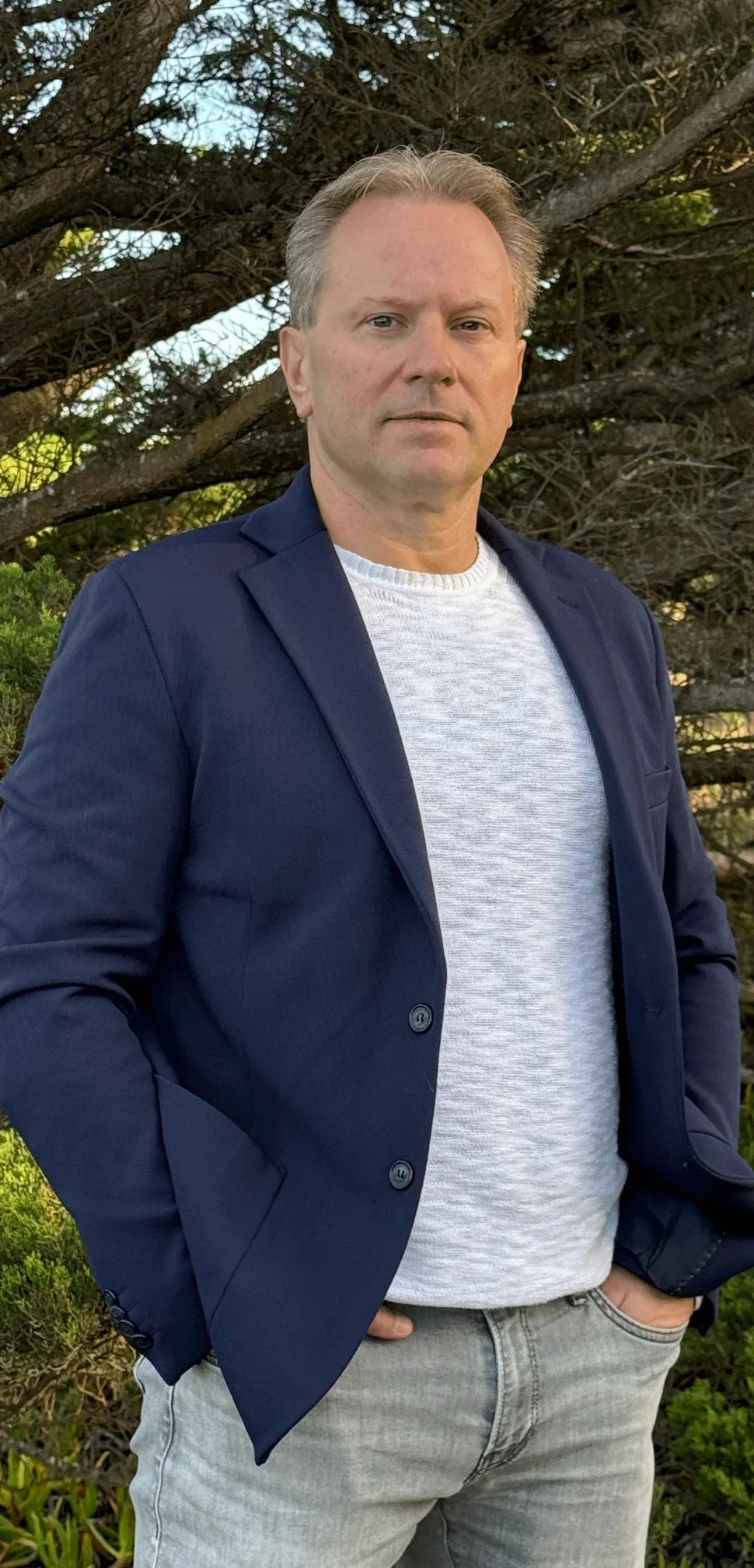
Jason Butler.

Jason

Founder and research lead

Physician-informaticist · MD, MPH · Research, data, cloud, and AI systems

Jason directs the project, makes owner-level decisions, and is responsible for ensuring that AI-supported work is reviewed, corrected, and held within the project's scientific, ethical, privacy, and publication boundaries.

Accountability detail

Jason Butler, MD, MPH. Jason holds seven AWS certifications spanning cloud architecture, development, operations, data analytics, databases, and machine learning:

  • AWS Certified Cloud Practitioner
  • AWS Certified Data Analytics – Specialty
  • AWS Certified Database – Specialty
  • AWS Certified Developer – Associate
  • AWS Certified Machine Learning – Specialty
  • AWS Certified Solutions Architect – Associate
  • AWS Certified SysOps Administrator – Associate

The project's legal research entity, formal principal-investigator appointment, IRB relationship, data custodian, and study-system arrangements will be identified when finalized and verified.

02 · Bounded workstreams

Named AI research assistants

Different roles are used to make questions, boundaries, and review responsibilities visible—not to simulate independent scientific evidence.

The following names identify continuing AI-supported workstreams, not human staff positions. Role descriptions state what each assistant is asked to examine; they are not professional credentials or independent appointments.

Jules

Research architecture, source authority, and cross-domain governance

Jules examines whether Research, Help, and Explore materials preserve their distinct purposes; tracks source authority and translation boundaries; and challenges unsupported or overextended claims.

René

Founder archive, reflexivity, and provenance

René develops safeguards for using founder materials as sensitizing and reflexive input without treating the founder as a Study 1 participant or allowing one documented experience to define the construct.

Étienne

Human-research protection and IRB readiness

Étienne organizes human-subject protection, consent, protocol, privacy, safety, and IRB-readiness questions for human and institutional review. This role does not issue IRB determinations or replace an IRB.

Émile

Private-reflection product, privacy, and safety architecture

Émile develops product and privacy requirements for a local-first reflection utility designed so the project does not receive private entries by default. This role does not authorize implementation or research-data collection.

Aimé

Participant-support design and human-centered safety

Aimé examines Help-domain content, support boundaries, urgent-help routing, dignity, agency, and the separation of support from research participation. This role does not provide clinical care or crisis intervention.

Cléo

Experiential translation and framework plurality

Cléo translates complex experiential material for the Explore domain while preserving skepticism, ordinary explanations, framework revision, and exit. This role does not certify metaphysical claims or relationship identities.

Implementation and integration

Kiro

Technical integration, release controls, and infrastructure coordination

Kiro integrates approved repository work, coordinates controlled releases and rollback points, and verifies infrastructure and publication gates. Kiro does not decide scientific claims, participant eligibility, or owner approval.

03 · Role boundaries

What the assistants do—and do not do

Bounded roles make review work legible. They do not create authority, professional status, or access to participants and private information.

What these assistants do

  • Locate and compare governed sources.
  • Draft and revise language for human review.
  • Test consistency, accessibility, privacy, safety, and cross-domain boundaries.
  • Identify gaps, negative cases, unsupported claims, and rollback requirements.
  • Prepare versioned audits, manifests, and change records.

What these assistants do not do

  • Enroll, screen, consent, diagnose, treat, or advise participants.
  • Determine another person's mind, consent, identity, destiny, or relationship status.
  • Replace an investigator, IRB, clinician, attorney, privacy officer, accessibility specialist, data custodian, or other accountable professional.
  • Turn repeated AI agreement into scientific replication.
  • Make an artifact authoritative merely by generating it.
  • Receive private reflections or research data through the public website.

04 · Governance process

How AI-supported work is governed

The visible sequence below is also the complete text alternative and reading order for the process.

  1. Governed sources
  2. Specialist drafting or critique
  3. Cross-role challenge and correction
  4. Versioned evidence and change record
  5. Human decision
  6. External or professional review when applicable
  7. Publication or rejection

Human responsibility does not transfer to an AI assistant. Agreement among AI assistants is not independent scientific replication. Jason and any later formally appointed human investigators, institutions, IRB, data custodians, advisors, and reviewers remain accountable within their actual roles.

05 · Responsible organizations

Current organizational and oversight status

Several organizational and research-leadership facts that were previously pending are now verified and documented below. Study-specific oversight, REDCap and data-custody arrangements, and federal registrations that remain in progress are identified separately.

Legal research organization
Twin-Flames Research Initiative, Inc. (TFRI) is a North Carolina nonprofit corporation and an IRS-recognized 501(c)(3) public charity under IRC section 170(b)(1)(A)(vi), effective November 6, 2025. EIN: 41-2455899.
Public Research website operator
Twin-Flames Research Initiative, Inc. is the accountable nonprofit publisher of the Relational Awakening Research website. RMD Centers provides technical and systems administration in kind as described below.
Principal Investigator
Jason Butler, MD, MPH, TFRI's founder and research lead, has been designated by TFRI as Principal Investigator for the planned Relational Awakening research program. Any future IRB, sponsor, funder, or collaborating institution may impose additional protocol-specific requirements.
Human-research-protection training
Jason Butler completed all five lessons in the HHS Office for Human Research Protections Human Research Protection Training sequence on June 11, 2026. OHRP states that it does not collect or independently verify the identity of learners completing these modules. Additional CITI, sponsor, institutional, or IRB-specific training will be completed if required.
IRB or other human-research oversight arrangement
Not yet finalized. Research enrollment is not open, and no recruitment, consent, enrollment, or participant research-data collection will begin until the appropriate independent human-research-protection determination or approval is documented.
REDCap hosting and research-data custody
TFRI's organizational REDCap license request is in progress. Final hosting, administration, research-data-custody, and system-of-record arrangements are not yet finalized. This public WordPress site does not collect research data.
Federal registration
TFRI is registering for its own Unique Entity Identifier (UEI) and related federal award-registration infrastructure.
Technical and infrastructure support
RMD Centers currently provides the project's informatics, cloud architecture, data-system development support, website and systems administration, repository and release infrastructure, and technical operations support in kind. This support role does not by itself designate RMD Centers as the study sponsor, IRB, REDCap host, legal research organization, or institutional research-data custodian.
Public contact and correction channels
Use the site's Accessibility and Contact and Corrections and Version History pages for public questions and corrections. Research enrollment is not open.

06 · Human advisors

Human advisors and collaborators remain distinct.

Only actual people or organizations with permission and verified public roles will be identified here.

Input and evidence are different

Community and lived-experience input may inform language, burden, dignity, support needs, and dissemination. Advisory input does not replace the IRB, community recurrence is not scientific replication, and advisory review is not relationship verification.

07 · Publication disclosures

Funding, relationships, conflicts, IP, and support

Verified organizational, leadership, and training information is now identified below. Other disclosures remain under review. A missing disclosure is not interpreted as “none.” RMD Centers' current in-kind support is disclosed; any separate material AI-platform or cloud support remains subject to verification.

Funding sources
Not yet finalized or publicly verified. TFRI's verified tax-exempt status does not imply that a particular study is funded.
Related organizations
RMD Centers is a separate nonprofit organization founded and led by Jason Butler. Its current role is the technical and infrastructure support described above.
Commercial relationships
No paid services agreement between Twin-Flames Research Initiative, Inc. and RMD Centers is currently in effect. If sufficient funding is secured, TFRI may consider a separately governed written services agreement with RMD Centers for ongoing development, maintenance, infrastructure operations, and technical support.
Investigator conflicts and overlapping leadership
Jason Butler founded and leads both TFRI and RMD Centers. That overlapping leadership and RMD Centers' in-kind support are disclosed here. TFRI is developing formal conflict-of-interest and related-organization management procedures. This disclosure is not, by itself, a finding of a prohibited conflict.
Intellectual-property interests
Not yet finalized or publicly verified.
In-kind support
RMD Centers currently provides the technical and infrastructure support described above in kind.

08 · Current status

Version, corrections, and contact dependencies

This Draft is prepared for owner and specialist review. It is not a public team-page release.

Study status: Research program in development.

Public enrollment: Public enrollment through this website is not open.

Separate public purposes: Research, Help, and Explore have different purposes. Help and Explore do not determine eligibility. Related entities and domains must be disclosed. Public resources do not provide personalized study results, and no covert person-level cross-domain linkage is used.

Public contact and corrections: A public contact method and correction route are not yet available.

Secret Link